How to Switch from Medigap to Medicare Advantage
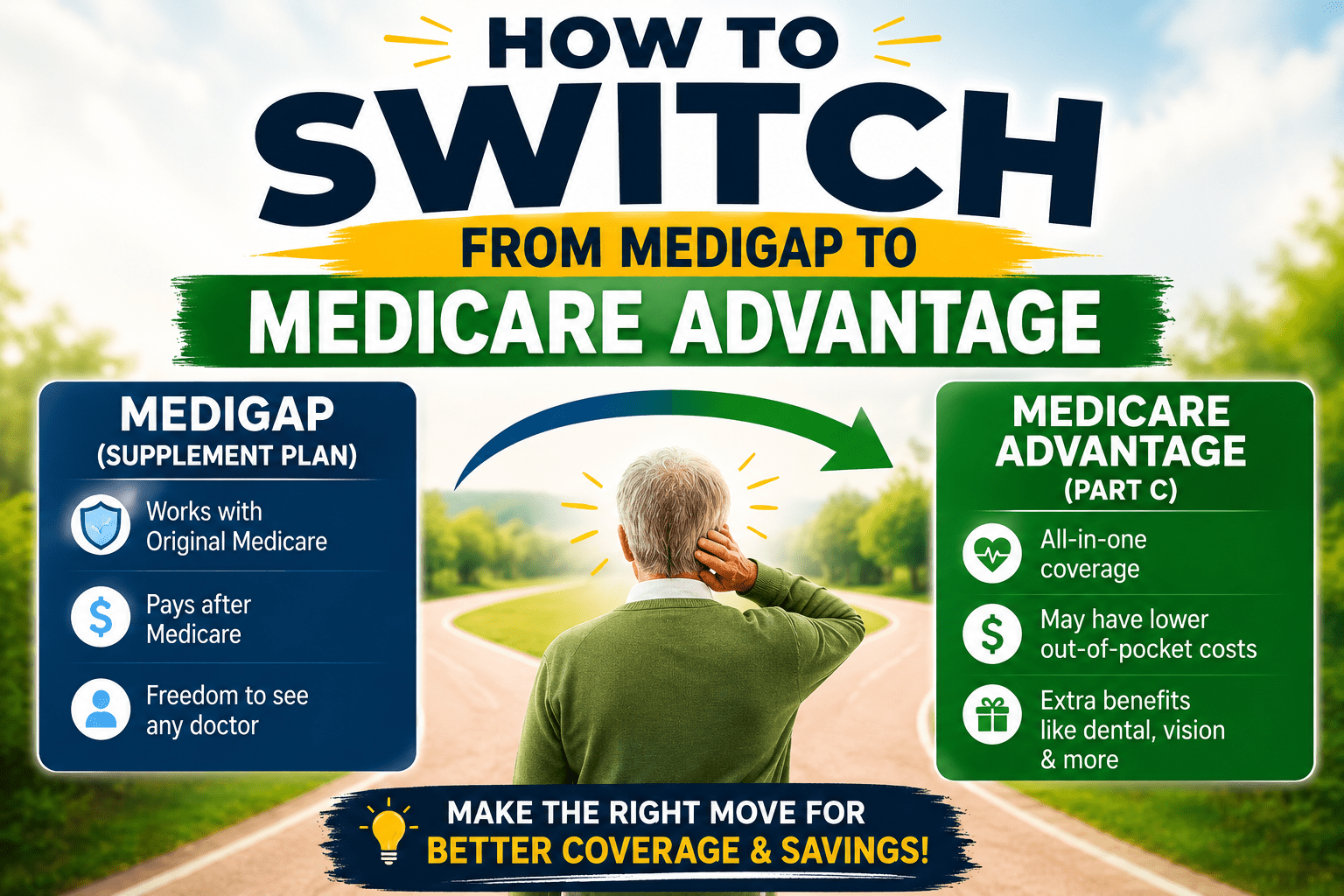
A step-by-step guide to making the switch safely, smartly, and on the right timeline
Short Summary
Yes, you can switch from Medigap to Medicare Advantage — and for many seniors, it’s one of the most financially impactful decisions they’ll make in retirement. But the process has specific timing rules, critical verification steps, and one major risk you need to understand before you act. This guide walks you through every step: when you can switch, how to compare plans, what to check before enrolling, and how to cancel your Medigap policy correctly. If you’re tired of rising Medigap premiums and curious whether Medicare Advantage could work better for you, this is the practical roadmap you need.
Why Are So Many Seniors Considering Switching from Medigap to Medicare Advantage?
Let me tell you about a phone call I had with my neighbor Margaret. She’d been on Medigap Plan G for four years, and she called me — knowing I’d recently made the switch — sounding equal parts frustrated and confused. Her premium had just gone up for the third year in a row. She was now paying $298 a month, and her insurer’s letter suggested next year might be higher still.
“Can you even switch?” she asked me. “I always thought once you’re on Medigap, that’s it.”
That’s a common misconception — and an expensive one. You can absolutely switch from Medigap to Medicare Advantage. Millions of seniors do it every year. The Annual Enrollment Period exists precisely for this kind of change. But how you do it matters enormously.
If you’re wondering whether switching makes sense, I shared my full experience in I Refused to Pay High Rates at 67 — including the numbers, the process, and what happened after. This guide focuses specifically on the how.
When Can You Switch from Medigap to Medicare Advantage?
Timing is everything with Medicare enrollment. You can’t simply call an insurer on a random Tuesday in April and switch over. There are specific windows — and missing them means waiting another year.
For most people switching from Medigap to Medicare Advantage, the Annual Enrollment Period (AEP) — October 15 to December 7 — is the primary window. Mark it on your calendar every year. If you miss it, you generally can’t switch until the following October.
The Medicare Advantage Open Enrollment Period (January through March) is for people already on a Medicare Advantage plan who want to switch to a different Advantage plan or go back to Original Medicare. It does not let you enroll in Medicare Advantage from Medigap.
How Do You Switch from Medigap to Medicare Advantage? (Complete Step-by-Step Guide)
I went through this process myself, and I want to give you the version I wish I’d had — detailed, practical, and honest about where mistakes can happen.
Step 1: Research Plans in Your ZIP Code (Start in September)
Go to Medicare.gov/plan-compare and enter your ZIP code. Filter results for Medicare Advantage plans. You can further filter by $0 premium, drug coverage included (MAPD), and plan type (HMO vs PPO). Make a shortlist of 3–5 plans that look promising. Don’t decide yet — this is just your research phase.
Step 2: Verify Your Doctors Are In-Network
For each plan on your shortlist, look up the provider directory and check every doctor you see regularly. Then call the doctor’s billing office directly — not the insurer’s phone line — and confirm they accept that specific plan. The billing team will give you the most accurate answer. Do this for your primary care doctor, all specialists, your hospital system, and any outpatient facilities you use.
Step 3: Check Your Medications on Each Plan’s Formulary
Every Medicare Advantage plan with drug coverage (MAPD) has a formulary — a list of covered medications and their cost tiers. Higher tiers mean higher copays. Use Medicare.gov’s formulary comparison tool to check every medication you take. If a drug is in Tier 4 or 5 on your preferred plan, your annual cost could easily exceed what you’d save on premiums.
Step 4: Compare Out-of-Pocket Maximums and Copay Structures
The out-of-pocket maximum is your financial safety net. Know it before you commit. Also compare: primary care copays, specialist copays, emergency room copays, and inpatient hospital costs. A plan with a $4,500 OOP max is meaningfully safer than one with an $8,500 max if you face a major health event.
Step 5: Enroll in Your Chosen Plan During AEP (Oct 15 – Dec 7)
You can enroll online at Medicare.gov, by calling 1-800-MEDICARE, or through a licensed insurance broker. Once you complete enrollment, your new Medicare Advantage coverage begins January 1st. You’ll receive your new plan card in December.
Step 6: Cancel Your Medigap Policy AFTER January 1st
Do not cancel your Medigap policy until your Medicare Advantage coverage has actually started. Once January 1st arrives and your Advantage card is confirmed, contact your Medigap insurer to cancel. Most insurers will prorate any unused premium. Confirm in writing that the cancellation is complete.
I made the mistake of almost canceling my Medigap in December, before my Advantage coverage kicked in. Thankfully, I caught myself. The safest approach: wait until you physically have your new plan card in hand, confirm the coverage start date, and only then call to cancel Medigap. There’s no rush — you’re not paying double because your Advantage premium is zero.
What Are the Biggest Mistakes People Make When Switching?
I’ve talked to a lot of people who’ve made this switch — some happily, some not. Here are the common mistakes that lead to regret:
What Happens If You Want to Switch Back to Medigap Later?
This is the most important thing I want you to carry away from this guide. Switching from Medigap to Medicare Advantage is relatively easy. Switching back is not.
In most states, if you later want to return to Medigap, insurance companies are legally allowed to apply medical underwriting. That means they can review your health history, deny your application based on pre-existing conditions, or charge you significantly higher premiums. A cancer diagnosis, a heart condition, diabetes — any of these could make you uninsurable for Medigap in most states after you’ve left it.
A few states — Connecticut, Maine, Massachusetts, New York, and others — have more protective rules that give you ongoing rights to Medigap regardless of health status. But in the majority of the country, leaving Medigap is effectively a one-way decision once your health changes.
Before making this switch, genuinely ask yourself: “If my health changes significantly in the next 5 years, am I comfortable knowing I may not be able to return to Medigap?” If the answer is yes — because the savings are meaningful and your current health is good — then proceed. If that uncertainty feels genuinely threatening, it may be worth keeping Medigap despite the cost. This is a decision that deserves more than a weekend of thought.
Frequently Asked Questions About Switching from Medigap to Medicare Advantage
Q: Can I switch from Medigap to Medicare Advantage at age 70 or older?
Yes. There’s no age limit on switching. The enrollment rules apply equally regardless of age. The main consideration is that the older you are, the more important it is to verify your health status and medical usage patterns before switching.
Q: Do I need to give my Medigap insurer advance notice before switching?
Not typically in the legal sense — you don’t need prior approval to switch. But you should call them to cancel once your new coverage begins. Some people give a few weeks of notice out of courtesy, which is fine. Just don’t cancel before your Advantage coverage starts.
Q: Can I switch from Medicare supplement to advantage mid-year if I move to a new state?
Moving to a new state can trigger a Special Enrollment Period, which may allow you to enroll in a Medicare Advantage plan outside the normal AEP window. Contact Medicare at 1-800-633-4227 to confirm your specific situation.
Q: Is medical underwriting required to switch from Medigap to Medicare Advantage?
No. When you switch from Medigap to Medicare Advantage, Medicare Advantage plans cannot deny you coverage based on health status. Medical underwriting only becomes a concern if you later try to switch back to Medigap.
Q: Will my premium increase if I switch from Medigap to Medicare Advantage?
For zero premium Medicare Advantage plans, your monthly cost will go from whatever you’re paying for Medigap to $0. You’ll still pay Part B ($174.70/month in 2024), but you pay that regardless of which type of coverage you have.
My Recommendations Before You Make the Switch
I’ve been on the other side of this decision. Here’s what I’d tell anyone standing where I was:
- Start researching in September — before the October 15 AEP window opens. You want to have your shortlist ready when enrollment begins.
- Use a SHIP counselor — free, unbiased, no commission motive. Find yours at shiphelp.org. This resource is wildly underused.
- Choose a PPO over HMO if flexibility matters — if you travel, have multiple specialists, or simply value freedom of choice, a PPO plan is worth the slightly higher copays it may carry.
- Look at Star Ratings — Medicare rates Advantage plans on a 1-to-5-star scale for quality. Aim for 4 stars or above. This reflects how well the plan manages care and handles member issues.
- Read the Evidence of Coverage document — this is the plan’s full legal rulebook. Dense, yes, but checking the hospitalization and specialist sections can reveal important details that the marketing brochure doesn’t.

Ready to Explore Your Options?
If you’re wondering whether switching makes sense, I shared my full experience — including the exact dollar savings, the plans I compared, and the process I followed — in I Refused to Pay High Rates at 67 – This is What I Did Instead.
👉 Start your research at Medicare.gov/plan-compare — it takes about 10 minutes.