What Are Zero Dollar Medicare Advantage Plans?
A plain-language explanation of how $0 premium plans work, what they actually cost, and what seniors need to know before enrolling
Short Summary
Zero dollar Medicare Advantage plans are Medicare Part C plans that charge no monthly premium beyond what you already pay for Medicare Part B. The government pays insurers a fixed capitation rate per member, which in competitive markets is enough for the insurer to offer coverage at $0 additional cost. These plans often include dental, vision, hearing, and drug coverage — but they do charge copays and coinsurance when you use care, and they have provider networks you must work within. This guide explains exactly how zero dollar plans work, what you’ll actually pay, and how to evaluate whether one is right for you.
How Did I Find Out About Zero Dollar Medicare Advantage Plans?
I’ll be honest with you. Until my Medigap premium renewal letter arrived — showing a jump to $312 a month — I had never seriously investigated what Medicare Advantage actually offered. I’d heard of it. I’d seen the commercials. I’d assumed it was something for people who couldn’t afford “real” Medicare coverage.
The first thing I noticed when I finally started researching was something that genuinely surprised me: some of the highest-rated Medicare Advantage plans in my area carried a $0 monthly premium. Not $30. Not $15. Zero. Nothing. Not a dime in monthly premium above what I was already paying for Part B.
I found several zero dollar plans that dramatically cut my costs at 67. You can read how I refused high rates in this Medicare cost story — the full account of my switch, my savings, and the process I used to choose.
But before you decide anything, you need to understand exactly what “zero dollar” means — and what it doesn’t.
What Does “Zero Dollar” Actually Mean — and What Does It Not Mean?
The phrase “zero dollar premium” refers to one specific cost: the monthly premium charged by the Medicare Advantage insurance plan itself. That charge goes to zero.
But there are other Medicare-related costs that don’t go away:
The key insight: a zero dollar plan doesn’t mean zero healthcare costs. It means zero monthly premium. You pay when you use care — but your plan’s out-of-pocket maximum puts a hard annual ceiling on what you can spend. Once you hit that maximum, the plan covers everything else at 100% for the rest of the year.
“The best way to think about it: zero premium plans shift your costs from certain monthly premiums to variable usage-based costs. If you stay healthy, you spend very little. If you have a tough health year, your plan’s OOP maximum is your financial ceiling.”
How Do Insurers Make Money on Zero Dollar Plans?
This is the first question most skeptical people ask — and it’s a good one. If you’re paying nothing in premiums, how is the insurance company making money?
The answer is the government capitation payment. When you enroll in Medicare Advantage, CMS (the Centers for Medicare & Medicaid Services) pays the insurer a fixed monthly amount on your behalf — essentially redirecting what would have been your Medicare spending into a managed care model. This capitation rate varies by county, risk profile, and plan quality, but in many urban and suburban markets, it’s generous enough that the insurer can offer $0 premium plans and still generate a profit.
In addition to capitation, insurers earn from:
- Copays and coinsurance you pay when you use care
- Risk-adjustment bonuses from CMS for enrolling and effectively managing higher-need patients
- Star Rating quality bonuses — plans with 4+ stars receive additional federal payments
- Care management efficiency — well-run plans that keep members healthier spend less on claims
In rural counties with fewer enrollees and lower capitation rates, this math often doesn’t work — which is why zero premium plans aren’t available everywhere.
What Benefits Do Zero Dollar Medicare Advantage Plans Typically Include?
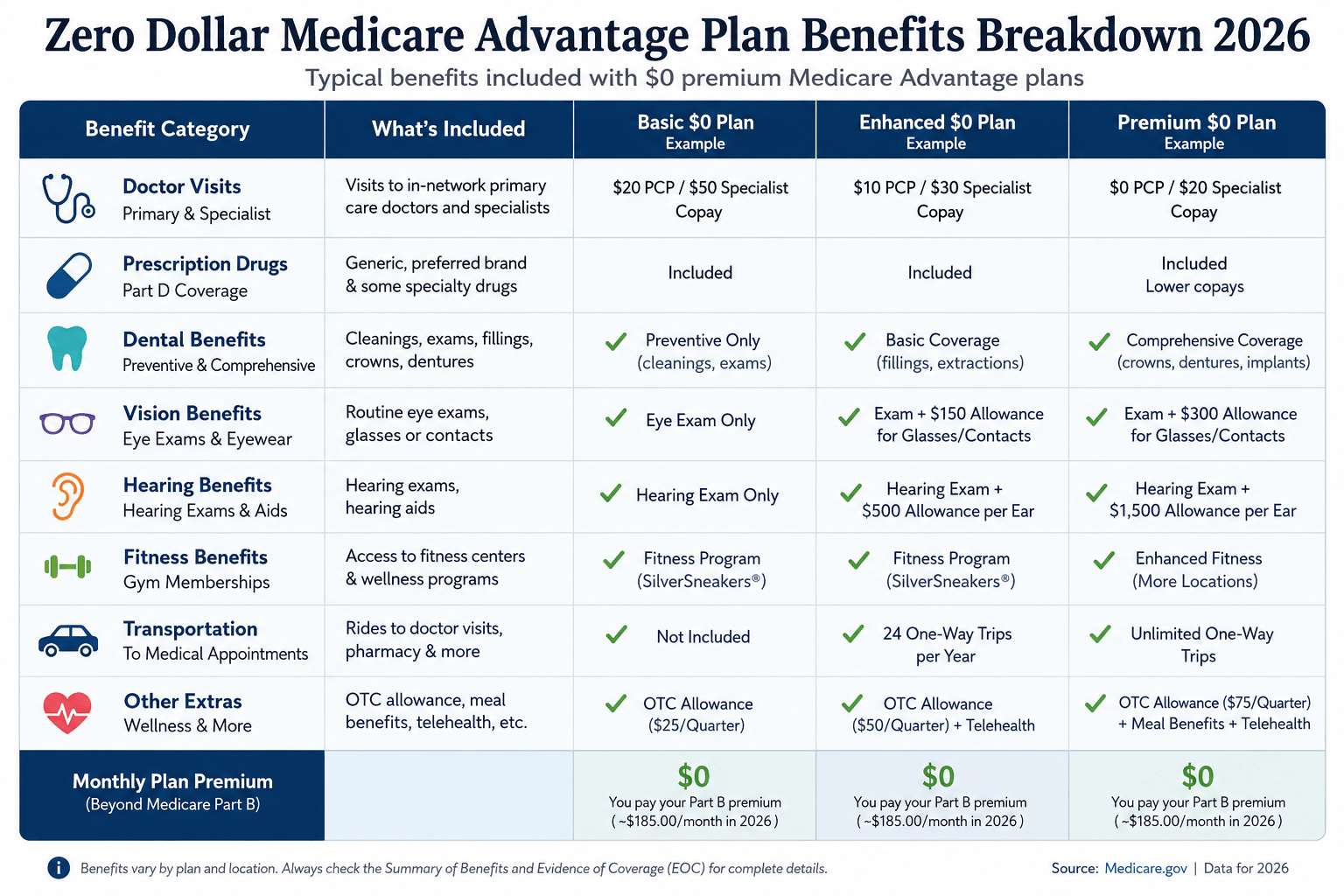
Here’s where the story gets genuinely interesting. Many zero dollar plans include benefits that traditional Medicare and Medigap simply don’t offer — at any price.
The dental coverage alone changed my calculations. I had been paying for dental insurance separately — about $55/month — and was still getting dinged on major procedures. My zero dollar Medicare Advantage plan’s dental benefit covered two cleanings and X-rays fully, plus 50% on fillings and crowns. That effectively added another $700+ in annual value on top of the premium savings.
What Are the Real Pros and Cons of Zero Dollar Medicare Advantage Plans?
Questions People Always Ask About Zero Dollar Medicare Plans
Q: Is a zero dollar Medicare Advantage plan the same as free healthcare?
No. Zero dollar means no monthly plan premium beyond Part B. You’ll still pay copays, coinsurance, and deductibles when you actually receive care. However, your plan’s out-of-pocket maximum limits how much you can spend in a single year.
Q: Are zero dollar Medicare Advantage plans worse than plans with a premium?
Not inherently. Many of the highest-rated plans on Medicare.gov carry $0 premiums. The quality of a plan is measured by its star rating, network, formulary, and OOP maximum — not by whether it charges a monthly premium. Some premium plans are excellent; some zero premium plans are too.
Q: Can a zero dollar plan become a paid plan next year?
Yes. Plans can change their premiums annually. If your plan introduces a premium next year, you’ll be notified by October 1st and can switch during AEP (October 15–December 7). Don’t auto-renew without reviewing your plan each fall.
Q: Do zero dollar plans cover emergency care outside my area?
Yes. All Medicare Advantage plans must cover emergency care nationwide, regardless of where you are. Urgently needed care is also typically covered when you’re away from home. Non-emergency out-of-area care, however, may not be covered on HMO plans unless you have a PPO version.
I’d spend one afternoon on Medicare.gov’s Plan Finder with my ZIP code, my medication list, and my doctors’ names in hand. The tool does most of the heavy lifting for you — it estimates annual drug costs, shows star ratings, and lets you compare plans side by side. It’s the most powerful free resource most seniors never use. Give it 60 minutes before making any decision.
Curious What Zero Dollar Plans Are in Your Area?
I found several zero dollar plans that dramatically cut my costs at 67. Read my full journey in this Medicare cost story — including exactly how I chose my plan and what it saved me.
👉 Medicare.gov/plan-compare — free, official, no sales pressure.